Source Multi Purpose Foam Car Seat Cleaner for Cleaning Upholstery
Find 30 verified options for multi purpose foam car seat cleaner designed for upholstery, interior surfaces, and general vehicle cleaning. Compare specifications, customization, and pricing from suppliers in China to find the best fit for your needs.
Key considerations
Products List




Comprehensive Sourcing Guide
Strategic Sourcing Guide for Multi-Purpose Foam Car Seat Cleaners
Understanding Product Specifications and Variability
When sourcing multi-purpose foam car seat cleaners, buyers must first navigate a landscape of diverse technical specifications that define the product's physical and chemical nature. The core product category often encompasses aerosol-based solutions designed for both automotive and household cleaning applications. A critical observation in the current market is the variability in physical state; while many listings describe the product as an aerosol liquid, other variants exist in liquid form without the aerosol propellant system. This distinction is vital for logistics, as aerosol products containing propellants like LPG (Liquefied Petroleum Gas) are subject to different shipping regulations compared to standard liquids.
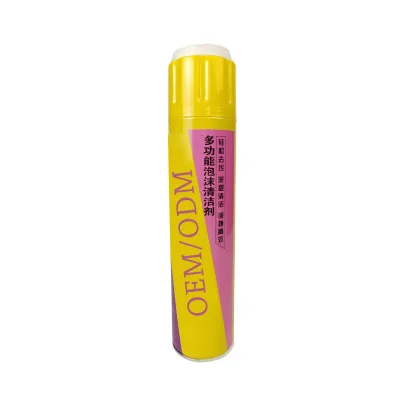
Capacity and volume standards vary significantly across suppliers. Observed data indicates that products are frequently standardized around specific volumes, such as 500ml, 650ml, or ranges spanning 300ml to 1000ml. Some packaging configurations explicitly list a standard of 650ml, while others offer a range of 450ml to 650ml. The physical form factor is also a key differentiator, with many units designed in an aerosol shape to facilitate spray application. However, buyers should verify if the specific unit they are considering is a "Spray Foam Cleaner" or a general "Multipurpose Cleaner," as the application method and foam density can differ.
Chemical properties further define the suitability of the cleaner for specific cleaning tasks. The pH level is a crucial metric; some products are characterized by a base pH, which is often effective for heavy-duty soil removal and engine types, while others may have different formulations. The boiling point of the active ingredients is another technical parameter, with some data points indicating a boiling point greater than 100 degrees Celsius. Additionally, the vapor density relative to air (ranging from 1.5 to 2.0 in observed data) and specific gravity (approximately 0.99 relative to water) are essential for understanding the behavior of the chemical in the can and its interaction with surfaces. Water solubility is another factor, with some formulations noted as fully soluble, which impacts how they rinse or leave residues on car seat fabrics.
Packaging Standards and Logistics Considerations
Packaging plays a pivotal role in the procurement of car seat cleaners, influencing both product protection and shipping costs. The industry utilizes a variety of packaging types, ranging from the primary container to the secondary shipping unit. Primary packaging often includes tin-plate cans, which are standard for aerosol products to ensure pressure integrity. The shape of the can is typically aerosol, designed to dispense the foam or liquid efficiently.
Secondary packaging varies widely among suppliers. Common configurations include individual boxes, which may be described as brown boxes, color boxes, or display boxes. These are often grouped into larger cartons for bulk shipping. Specific packing standards observed in the market include configurations such as 24 pieces per carton for 650ml units, while other listings specify 12 pieces per carton. The net weight and gross weight of the product are also critical for freight calculations; for instance, a specific listing notes a net weight of 400g and a gross weight of 515g, indicating the weight of the packaging materials and propellant.
Buyers must also consider the origin of the product when planning logistics. Most observed listings indicate origins in China, with specific provinces like Guangdong and Shandong being prominent manufacturing hubs. The location of the supplier impacts lead times and shipping routes. Furthermore, the product standard often dictates the packaging density; for example, a standard of "650ml x 24PCS/CTN" implies a specific stacking and palletization strategy. Understanding these packaging nuances is essential for calculating the total landed cost, as the volume occupied by the cartons and the weight of the tin-plate cans directly affect freight charges.
Compliance, Safety, and Certification Verification
Navigating the regulatory landscape for car cleaning chemicals requires rigorous verification of compliance and safety standards. While specific certification data in the provided context is limited, the mention of REACH (Registration, Evaluation, Authorization and Restriction of Chemicals) suggests that European market entry may require adherence to these stringent chemical regulations. Buyers should not assume that all listed products automatically possess such certifications; instead, they must explicitly request proof of compliance for the specific batch or model they intend to purchase.
Safety data regarding the chemical composition is paramount. The presence of propellants like LPG necessitates compliance with hazardous materials transportation regulations. The physical state of the product, whether aerosol or liquid, dictates the necessary safety labels and handling procedures. For products with a base pH, users must be aware of potential skin irritation or material compatibility issues with certain car seat fabrics. The expiration date is another compliance-related attribute, with some products listed with a shelf life of 3 years. This timeframe is critical for inventory management to ensure that the product remains effective and safe for use before it degrades.
Buyers should also verify the "Use" classification of the product. Some items are marketed specifically for "Car and Household Cleaning," while others are designated for "Anti-Water" protection or "Glossing, Polishing & Grinding." Misclassification can lead to regulatory issues if a product intended for general cleaning is used in a specialized application without proper testing. Additionally, the "Strong Abluent for Engine Type" attribute suggests a specific chemical potency that may require specific handling instructions or safety gear, which should be documented in the supplier's safety data sheets (SDS).
Cost Drivers and Pricing Dynamics
The pricing of multi-purpose foam car seat cleaners is influenced by several dynamic factors, including raw material costs, packaging complexity, and order volume. The observed price range in the market spans from $0.37 to $2.80 USD per unit. This wide variance reflects differences in product formulation, can size, and the inclusion of additional features like custom fragrances or specialized packaging.
The Minimum Order Quantity (MOQ) is a significant cost driver. The market shows an MOQ range from 24 units to over 26,000 units. Some suppliers set a specific MOQ of 6,000 pieces, which can be a barrier for smaller buyers but offers economies of scale for larger operations. The relationship between price and MOQ is often inverse; higher order volumes typically result in a lower unit price. Buyers must balance their inventory needs against the upfront capital required to meet these MOQ thresholds.
Customization is another factor that impacts cost. The availability of customization options, such as custom fragrances (e.g., Lemon) or private labeling, often incurs additional setup fees or higher unit costs. The "Service" attribute indicating OEM and ODM capabilities suggests that buyers can tailor the product to their brand, but this customization process may extend lead times and increase the overall procurement cost. Additionally, the type of packaging, such as the use of display boxes versus simple brown boxes, can influence the final price. Buyers should request detailed cost breakdowns to understand how much of the price is attributed to the chemical formulation versus the packaging and logistics.
Supplier Evaluation and Operational Capabilities
Evaluating potential suppliers requires a focus on their operational capabilities and flexibility. The market data indicates that many suppliers offer OEM and ODM services, allowing buyers to customize the product's fragrance, packaging, and labeling. This flexibility is crucial for brands looking to differentiate their offerings in a competitive market. The ability to provide free samples is another positive indicator of supplier confidence and willingness to engage in a trial phase.
Geographic location is a key factor in supplier selection. Suppliers are primarily located in Guangdong and Shandong, China. Buyers should consider the proximity of the supplier to major ports, as this can affect shipping efficiency and costs. The specific model numbers, such as MC-312, 34907865, 56-897765, YIQUN-060, SG, and CYJAC13, serve as unique identifiers for the supplier's product lines. Buyers should verify that the specific model they are interested in matches their technical requirements, as different models may have different capacities, fragrances, or chemical compositions.
The supplier's ability to handle large order volumes is also important. With observed MOQs reaching over 26,000 units, suppliers must have the manufacturing capacity to meet high demand. Buyers should inquire about the supplier's production lead times and their ability to scale up or down based on market fluctuations. The "Service" attribute suggests that suppliers are equipped to handle custom orders, but buyers should confirm the timeline and cost implications of such services.
Quality Control and Long-Term Procurement Strategy
Implementing a robust quality control (QC) strategy is essential for ensuring the consistency and safety of multi-purpose foam car seat cleaners. Buyers should establish clear acceptance criteria based on the technical specifications provided, such as capacity, pH level, and physical state. Regular testing of incoming batches is recommended to verify that the product meets the agreed-upon standards, particularly regarding the expiration date and the integrity of the aerosol can.
Long-term procurement considerations involve building a sustainable relationship with suppliers. This includes negotiating favorable terms for repeat orders, securing consistent pricing, and ensuring a reliable supply chain. Buyers should also consider the environmental impact of the products, particularly regarding the propellants used and the recyclability of the packaging. The "Fragrance: Custom" attribute offers an opportunity to explore eco-friendly or hypoallergenic scent options that align with modern sustainability trends.
Finally, buyers should maintain open communication with suppliers regarding any changes in regulations or market conditions. The automotive cleaning industry is subject to evolving safety and environmental standards, and suppliers must be agile in adapting their products to meet these new requirements. By staying informed and proactive, buyers can mitigate risks and ensure a steady supply of high-quality multi-purpose foam car seat cleaners for their operations.
Comparative Analysis of Product Attributes
To assist buyers in making informed decisions, the following table summarizes key product attributes observed in the market. This comparison highlights the variability in specifications that buyers must consider during the sourcing process.
| Attribute Category | Observed Variations | Key Considerations for Buyers |
|---|---|---|
| Capacity | 300-500ml, 500-1000ml, 450ml, 650ml | Verify the exact volume required for the target application; check if the standard matches the packaging density. |
| Physical State | Aerosol Liquid, Liquid | Determine if propellant (LPG) is required; check shipping regulations for aerosols vs. liquids. |
| Packaging | Tin-Plate Can, Box, Carton, Display Box | Assess the cost impact of display packaging vs. bulk cartons; verify net/gross weight for freight. |
| Fragrance | Custom, Lemon, None | Confirm if custom scents are available and if there are additional costs or lead times. |
| pH Level | Base, Variable | Ensure the pH is compatible with car seat materials to prevent damage. |
| MOQ | 24, 6000, up to 26112 | Balance inventory needs with cash flow; negotiate MOQ for trial orders if possible. |
| Origin | Guangdong, China; Shandong, China | Consider logistics costs and lead times based on the specific province of origin. |
| Expiration | 3 Years | Plan inventory turnover to ensure product freshness and effectiveness. |
By carefully analyzing these attributes and aligning them with specific business needs, buyers can effectively navigate the complex landscape of multi-purpose foam car seat cleaner sourcing. The goal is to secure a product that meets technical requirements, complies with regulations, and offers a competitive advantage in the market.
FAQs
What is the standard capacity for multi purpose foam car seat cleaner?
Standard capacities typically range from 300ml to 1000ml, with common specific sizes being 450ml, 500ml, and 650ml. Buyers should verify the exact volume required for their packaging needs as options vary by supplier model.
Can I request custom fragrance options for this product?
Yes, custom fragrance options are available, including specific scents like lemon. Suppliers often provide OEM and ODM services to tailor the scent and packaging to your brand requirements.
What is the typical MOQ for ordering multi purpose foam car seat cleaner?
Minimum Order Quantities vary significantly, ranging from 24 units up to over 26,000 units depending on the supplier. Some specific listings require an MOQ of 6,000 pieces for standard configurations.
How are these cleaners packaged for shipping?
Products are commonly packed in tin-plate cans inside brown, color, or display boxes. Bulk cartons often contain 12 or 24 pieces per carton, with specific standards like 650ml units packed 24 per carton.
Which physical state is most common for this cleaner?
The most common physical state is aerosol liquid, utilizing propellants like LPG for spray application. Some variants exist as standard liquids without aerosol systems, so verify the specific model before ordering.
Where are the primary manufacturing locations for these products?
Primary manufacturing locations are in China, with major hubs in Guangdong and Shandong provinces. Buyers should confirm the specific origin to assess logistics and shipping lead times effectively.
What is the shelf life or expiration date for this product?
The typical expiration date for these cleaners is 3 years from the manufacturing date. This timeframe is critical for inventory management to ensure product efficacy and safety before use.